What Is an Instant Temporary Email Address?
An instant temporary email address, often called disposable email or temp mail, is a short-term email account that allows users to receive emails without using their real email address. These addresses are designed for quick use—sometimes lasting only a few minutes, hours, or days—before automatically expiring or being deleted.
Imagine walking into a coffee shop and borrowing a cup just to drink water once, then returning it. That’s essentially what a temporary email address does in the digital world. It provides a quick, anonymous way to receive messages—verification codes, download links, or signup confirmations—without committing your primary inbox.
Disposable email services have exploded in popularity because people are increasingly concerned about privacy, spam, and data security. Websites constantly ask for email addresses before granting access to downloads, communities, or services. Over time, those emails can turn into endless newsletters, marketing campaigns, and promotional messages. A temporary email address solves that problem by acting as a protective shield between your real identity and the internet.
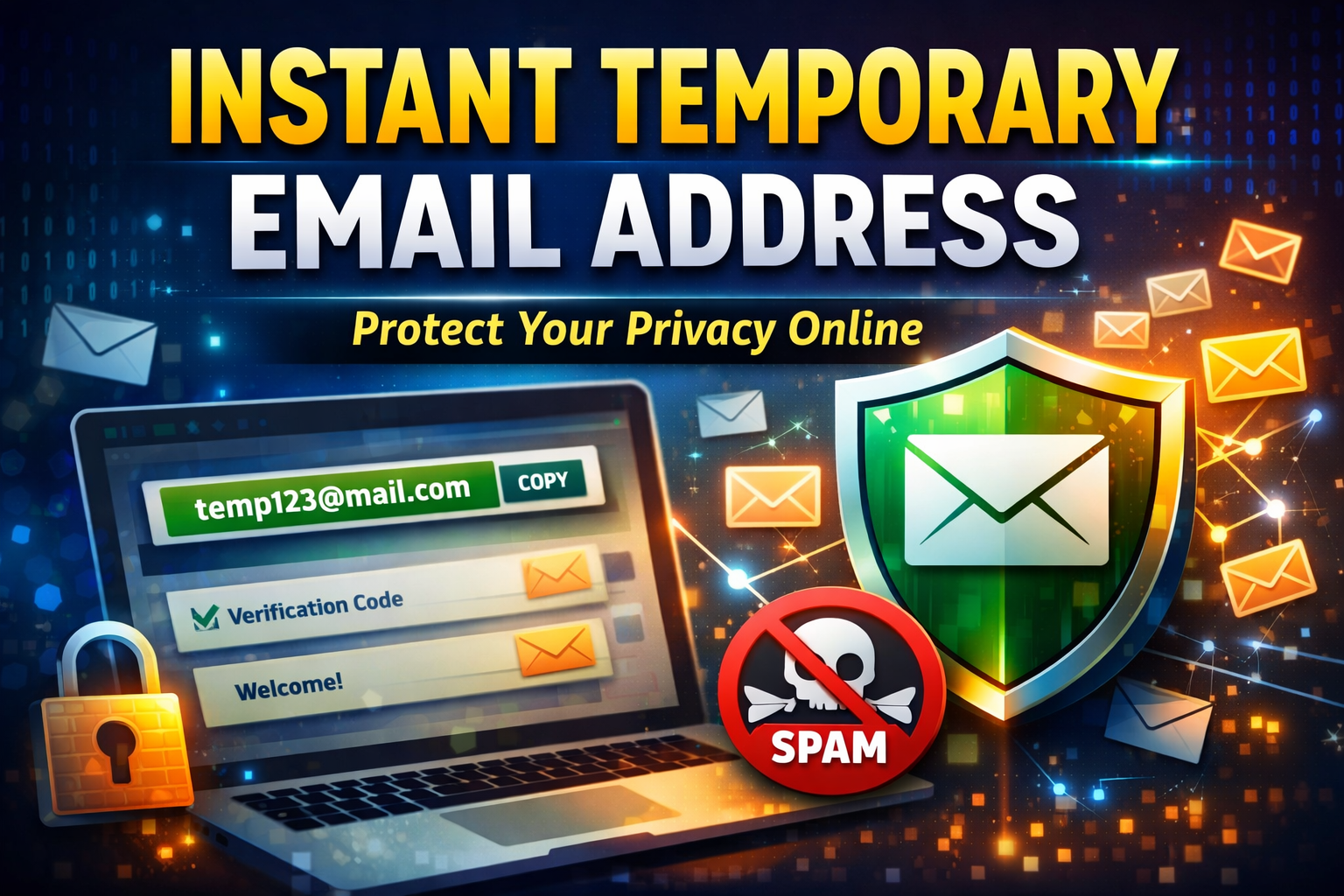
Temporary email services usually generate a random address instantly—something like abc123@tempmail.com. You copy it, use it on a website, and any incoming emails appear in a temporary inbox. Once the time expires, the inbox and messages disappear permanently.
This simple idea has turned into an essential digital privacy tool used by everyday internet users, developers, marketers, and cybersecurity professionals alike.
How Instant Temporary Email Addresses Work
Step-by-Step Process of Generating a Temporary Email
At first glance, temporary email services look almost magical. You open a website, and instantly you have a working email address ready to receive messages. But behind the scenes, the process is actually quite straightforward.
Here’s how most instant temporary email systems work:
-
A user visits a disposable email website or app.
-
The system automatically generates a random email address.
-
The temporary inbox appears instantly on the page.
-
The user copies the address and uses it for registrations or verifications.
-
Incoming emails arrive in that temporary inbox.
-
After a set period, the email address and messages are automatically deleted.
What makes this process powerful is the speed and simplicity. Unlike traditional email services like Gmail or Outlook, temporary email services require no registration, no password, and no personal information.
This makes them ideal for situations where you only need an email for a single interaction. Instead of cluttering your primary inbox, you can create an instant email address in seconds and discard it once it has served its purpose.
Technical Infrastructure Behind Temp Mail Services
Under the hood, disposable email platforms operate using mail servers and domain systems, similar to traditional email providers. The difference is that these systems are optimized for short-term usage.
Temporary email providers typically:
-
Own multiple domains such as
tempmail.com,maildrop.cc, orguerrillamail.com. -
Generate random email usernames automatically.
-
Store incoming emails on their server for a limited period.
-
Display messages directly in a browser interface.
Instead of creating a private mailbox with passwords and encryption like traditional email providers, temporary email services often use public or semi-public inboxes that exist temporarily. Once the expiration time passes, the inbox and its data are removed from the system.
This lightweight infrastructure allows services to generate millions of temporary email addresses instantly while keeping operational costs extremely low.
Types of Temporary Email Addresses
Temporary email services aren’t all the same. There are several types of disposable email systems, each designed for slightly different purposes.
Throwaway Email Addresses
Throwaway emails are the most common type of temporary email. These addresses are created for one-time use and automatically disappear after a short period. Some services delete them after 10 minutes, while others keep them active for a few hours or days.
The purpose of a throwaway email is simple: use it once and forget about it. People typically rely on these emails when signing up for free downloads, newsletters, or trial accounts.
Alias Email Addresses
Alias emails work a bit differently. Instead of creating a completely separate inbox, they forward messages to your main email address while keeping your real address hidden.
For example, you might create something like:
shoppingalias@example.com
Emails sent to that alias are forwarded to your main inbox. If the alias starts receiving spam, you can delete it without affecting your real email account.
Burner Email Accounts
Burner emails sit somewhere between throwaway emails and aliases. They can last longer than typical temporary emails but are still designed for temporary use.
Users may create burner accounts when they want to communicate for a short time—such as selling items online or signing up for forums—without exposing their primary email address.
Benefits of Using an Instant Temporary Email Address
Privacy and Anonymity
One of the biggest reasons people use temporary email addresses is privacy protection. In today’s digital world, every website seems to demand an email address before granting access to content or services.
When you use a disposable email, your real identity remains hidden. Even if the website stores or shares the email address, it cannot be traced back to your primary inbox.
Temporary emails provide an additional layer of anonymity by eliminating the need for personal information during signup. Many services generate email addresses instantly without asking for names, passwords, or phone numbers.
Protection from Spam and Marketing Emails
Anyone who has used the internet for a few years knows the pain of spam emails. Once your email address ends up on marketing lists, it can be nearly impossible to escape.
Temporary email addresses prevent this problem by acting as a spam shield. Instead of giving your real email address to every website, you can use a disposable one.
If the inbox becomes flooded with promotional emails, it simply disappears after expiration. Your primary inbox stays clean and organized.
Security Against Data Breaches
Data breaches have become increasingly common. When companies experience security incidents, customer email addresses often get leaked or sold on the dark web.
Using a disposable email minimizes this risk because your real email address is never shared with the service in the first place. Even if the temporary email database is compromised, the information is usually meaningless because the address will soon expire.
This makes temporary email an effective tool for reducing exposure to cyber threats and identity theft.
Popular Temporary Email Services in 2026
Several platforms dominate the temporary email industry. These services allow users to generate disposable email addresses instantly with no registration required.
| Service | Key Feature | Typical Email Duration |
|---|---|---|
| Temp Mail | One-click email generation | Minutes to days |
| 10 Minute Mail | Ultra-short email lifespan | 10–20 minutes |
| Guerrilla Mail | Custom inbox names | Up to 1 hour |
| Mailinator | Public inbox system | Temporary |
| EmailOnDeck | Anonymous signup | Short-term |
Many of these services allow users to extend the life of their inbox if they need more time to receive emails.
Common Use Cases for Disposable Emails
Signing Up for Websites and Free Trials
The most common reason people use temporary emails is for website registrations. Many websites require users to verify their email address before accessing downloads, whitepapers, or tools.
Instead of risking spam, users can create a temporary email address, verify the account, and discard it afterward.
Temporary emails are also widely used for free trial registrations. Some users create multiple temporary accounts to test software repeatedly.
Testing Applications and Software Development
Developers frequently rely on disposable email services during application testing.
For example, when building a website with a user registration system, developers need to test:
-
Email verification links
-
Password reset emails
-
Signup confirmations
Creating hundreds of real email accounts for testing would be impractical. Disposable emails allow developers to simulate real user interactions quickly.
Risks and Limitations of Temporary Email Services
Despite their benefits, temporary emails are not perfect. One major issue is security. Many temporary email services do not require passwords or authentication, which means anyone who knows the email address might access the inbox.
Another challenge is reliability. Because temporary inboxes expire quickly, users may lose access to important messages if they don’t retrieve them in time.
From a business perspective, disposable emails can also create problems for marketing campaigns. Companies rely on email lists to communicate with customers, and temporary addresses often lead to high bounce rates and poor engagement.
For these reasons, many websites now actively block known disposable email domains.
Temporary Email vs Permanent Email: Key Differences
| Feature | Temporary Email | Permanent Email |
|---|---|---|
| Lifespan | Minutes to days | Unlimited |
| Registration Required | Usually no | Yes |
| Privacy Level | High | Moderate |
| Spam Risk | Very low | High |
| Security | Lower | Higher |
Temporary emails are ideal for short-term interactions, while permanent emails are better for long-term communication and important accounts.
How Businesses Detect and Block Disposable Emails
Because disposable emails can lead to fake accounts and fraudulent activity, many companies attempt to detect them.
Common detection methods include:
-
Checking email domains against databases of disposable providers
-
Using email verification APIs
-
Monitoring suspicious signup behavior
Businesses often maintain lists of known temporary email domains and automatically block registrations using those addresses.
Tips for Safely Using Temporary Email Addresses
If you plan to use disposable emails regularly, keep these best practices in mind:
-
Never use temporary emails for important accounts.
-
Avoid using them for password resets or banking services.
-
Choose reputable providers.
-
Retrieve verification emails quickly before expiration.
Think of temporary email as a digital mask. It’s perfect for quick tasks but not for long-term communication.
The Future of Temporary Email and Online Privacy
As online privacy becomes a growing concern, temporary email services are likely to become even more popular. With rising concerns about data collection, surveillance, and targeted advertising, many users are looking for ways to minimize their digital footprint.
Developers are already experimenting with advanced disposable email tools that include encrypted inboxes, private domains, and API integrations for businesses.
The future of temporary email may include:
-
AI-powered spam filtering
-
private disposable inboxes
-
encrypted temporary messaging
-
blockchain-based identity protection
Temporary email addresses are evolving from simple spam-avoidance tools into powerful privacy solutions for the modern internet.
Conclusion
Instant temporary email addresses have become an essential tool in today’s digital world. They provide a fast and convenient way to protect your privacy, avoid spam, and keep your primary inbox clean. Whether you’re signing up for a website, testing an application, or simply trying to stay anonymous online, disposable email services offer a simple yet powerful solution.
While they aren’t suitable for sensitive communication or long-term accounts, temporary emails play a valuable role in protecting users from spam, data breaches, and unwanted marketing messages. As online privacy continues to gain importance, disposable email services will likely become a standard part of everyday internet use.
FAQs
1. What is an instant temporary email address?
An instant temporary email address is a disposable email account that can be created instantly and used for a short period before automatically expiring.
2. Are temporary email addresses free?
Yes, most temporary email services are completely free and do not require registration.
3. How long does a temporary email last?
Depending on the service, temporary emails may last anywhere from 10 minutes to several days.
4. Can I send emails from a temporary email address?
Some services allow sending emails, but many disposable email platforms only support receiving messages.
5. Is using temporary email legal?
Yes, using disposable email addresses is legal. However, using them for fraudulent activities or bypassing service policies may violate website rules.