What Is a One Time Email Address?
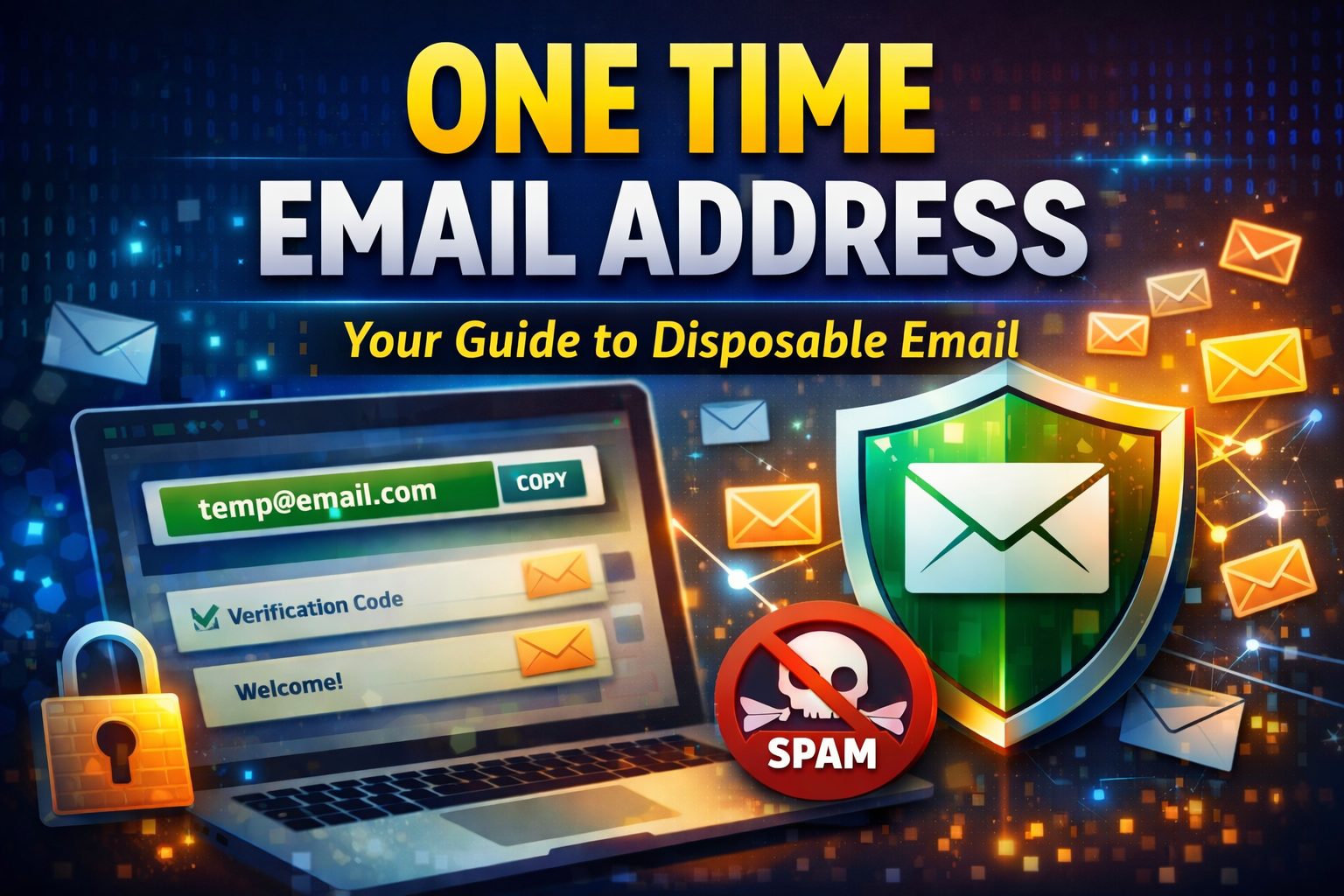
A one time email address is a temporary email account that can be used once or for a short period before it automatically expires. Unlike traditional email services such as Gmail or Outlook, a disposable email address does not require registration, personal details, or long-term storage. You simply generate the address instantly, use it to receive emails like verification codes or download links, and then discard it.
Think of it like using a paper cup instead of a reusable mug. You use it briefly and throw it away when you're done. A one time email address works in the same way—perfect for quick online interactions where you don't want to expose your real email address.
These temporary email services have become increasingly popular because modern websites often require email registration before granting access to resources. Whether you're downloading an eBook, accessing a free trial, or joining a forum, the first thing most platforms ask for is your email. Using your primary email address repeatedly can quickly fill your inbox with marketing messages and unwanted newsletters.
Disposable email services solve this problem by creating anonymous, short-term inboxes. Many services generate a random email instantly and allow you to receive messages without creating an account. The inbox exists for a limited time—sometimes as little as 10 minutes or as long as a few days—before automatically deleting itself.
This simple concept has become a powerful tool for internet users who want greater control over their privacy, data security, and online identity.
How One Time Email Addresses Work
The Basic Process Behind Temporary Email Generation
Using a one time email address is incredibly simple, which is one reason these services are so widely adopted. Most disposable email providers follow a straightforward process that allows users to create temporary inboxes in seconds.
When a user visits a temporary email website, the platform automatically generates a random email address using one of its domains. The inbox is instantly activated, allowing the user to receive incoming messages immediately. Users can copy the generated address and paste it into signup forms, download gates, or verification pages.
Once someone sends an email to that address, the message appears in the temporary inbox displayed on the webpage. No login or password is required. The system simply refreshes the inbox automatically to show incoming messages.
After a predetermined period—often between 10 minutes and 24 hours—the inbox is automatically deleted along with its contents.
This automatic deletion is what makes the email “one time.” Once the session ends, the address disappears permanently. This ensures that the email address cannot be reused or linked to your identity later.
Infrastructure and Technology Behind Disposable Emails
Behind the scenes, disposable email services operate using mail servers and temporary domain pools. Providers maintain a list of email domains specifically designed for short-term use. When a user generates a new email address, the system randomly combines a username with one of these domains.
The incoming emails are stored temporarily on servers and displayed through a web interface. Because these inboxes are temporary, the system does not need complex authentication systems like traditional email platforms.
Many modern disposable email systems also use distributed server architecture, which helps prevent tracking and ensures anonymity. Even if one server is compromised, it cannot easily be linked to a specific user identity.
This infrastructure makes temporary email services fast, scalable, and capable of generating millions of disposable addresses every day.
Key Benefits of Using a One Time Email Address
Protection From Spam and Marketing Emails
One of the biggest frustrations of using the internet today is dealing with spam emails. Every time you enter your email on a website, there’s a risk that it will end up on marketing lists or be shared with third parties.
Disposable email addresses act as a spam shield. Instead of giving your real email address to every website, you can provide a one time email. Once the temporary inbox expires, all promotional messages disappear with it.
This is particularly useful when signing up for downloads, newsletters, or limited-time promotions. You receive the verification email you need without exposing your personal inbox to long-term spam campaigns.
The scale of email spam makes this benefit even more important. In 2024 alone, more than 376 billion emails were sent daily worldwide, and about 46.8% of them were spam or unwanted messages.
Using disposable email helps users avoid becoming part of that overwhelming flood of spam.
Privacy and Online Anonymity
Another major benefit of using a one time email address is privacy protection. When you use your real email address online, it often contains identifying information such as your name or company domain. This information can be used to track your online activities.
Temporary emails allow you to interact with websites without revealing your identity. Because no personal details are required to create the inbox, your actions remain anonymous.
This level of anonymity can be useful in many situations—joining forums, accessing gated content, or contacting sellers on classified websites.
Security Against Data Leaks
Data breaches have become increasingly common across the internet. When companies experience security incidents, email addresses are often among the first pieces of information exposed.
Using a one time email address significantly reduces this risk. Since the email address is temporary and not connected to your primary account, even if the website suffers a breach, your personal email remains safe.
This approach acts as a buffer layer between your real identity and the websites you interact with.
Popular One Time Email Services in 2026
Many disposable email providers are available today, each offering different features such as custom domains, longer expiration times, or browser extensions.
| Service | Key Feature | Typical Lifespan |
|---|---|---|
| Temp Mail | Instant email generation | Minutes to hours |
| 10 Minute Mail | Ultra short email lifespan | 10–20 minutes |
| Guerrilla Mail | Custom email aliases | Up to 1 hour |
| Mailinator | Public inbox system | Temporary |
| EmailOnDeck | Anonymous registration | Short-term |
These services allow users to generate email addresses instantly without registration or personal information.
Common Use Cases of Disposable Emails
Website Sign-Ups and Free Trials
Many people use one time email addresses when signing up for online services. Some websites require email verification before granting access to tools, resources, or downloads.
Temporary emails make it possible to complete this verification without exposing your primary email address.
Developers and Software Testing
Developers often rely on disposable email services during application testing. When building signup forms or password reset systems, developers need to test how email notifications behave.
Temporary email addresses allow them to create multiple accounts quickly without managing dozens of real inboxes.
Online Marketplaces and Classifieds
Temporary email addresses are also widely used in online marketplaces. When contacting sellers or buyers, users may prefer to stay anonymous until they are comfortable sharing personal contact information.
Disposable email addresses provide a safe way to communicate without revealing your primary email.
Risks and Limitations of One Time Email Addresses
Despite their benefits, disposable email addresses come with some limitations.
First, security can be weaker than traditional email systems. Many temporary email inboxes are publicly accessible if someone knows the address. This means sensitive information should never be sent to such inboxes.
Second, some businesses actively block disposable email domains. Because temporary emails are sometimes used for spam or fraudulent activities, many platforms maintain databases of known disposable domains.
Organizations also use detection tools to identify and block temporary emails to prevent fake registrations.
For this reason, a one time email address may not work on every website.
One Time Email vs Permanent Email
| Feature | One Time Email | Permanent Email |
|---|---|---|
| Lifespan | Minutes to days | Unlimited |
| Registration Required | No | Yes |
| Privacy Level | High | Moderate |
| Spam Exposure | Very low | High |
| Security Level | Lower | Higher |
Permanent emails are better for long-term communication, while disposable emails are ideal for quick, anonymous interactions.
How Businesses Detect Disposable Emails
Companies often use advanced systems to identify disposable email addresses during signup.
Common methods include:
-
Checking email domains against disposable domain databases
-
Using email verification APIs
-
Monitoring suspicious signup patterns
There are currently tens of thousands of known disposable email domains, making it easier for organizations to detect and block them.
Best Practices for Using Temporary Email Safely
Using disposable emails responsibly can help protect your privacy while avoiding potential risks.
Some important tips include:
-
Avoid using temporary emails for financial accounts
-
Never store sensitive information in disposable inboxes
-
Retrieve important emails immediately before expiration
-
Choose reputable providers
Disposable emails are best treated as short-term tools rather than permanent communication channels.
Future of Disposable Email Technology
The demand for online privacy continues to grow, and disposable email services are evolving to meet this need. Analysts predict strong growth in the disposable email tool market as more users look for ways to protect their personal data online.
Some forecasts suggest the disposable email tool industry could grow at over 7% annually between 2025 and 2032.
Future developments may include:
-
encrypted temporary inboxes
-
AI-powered spam filtering
-
decentralized identity systems
-
privacy-focused email APIs for developers
As digital privacy becomes more important, one time email addresses will likely become a standard tool for internet users.
Conclusion
One time email addresses provide a powerful and convenient solution for protecting your privacy online. By generating disposable inboxes that automatically expire, these services help users avoid spam, reduce exposure to data breaches, and maintain anonymity while interacting with websites.
They are especially useful for quick tasks such as signing up for downloads, accessing free trials, or testing applications. While they should not replace permanent email accounts for important communication, disposable emails play an essential role in modern internet privacy.
As concerns about data security continue to grow, the popularity of one time email services will likely increase. These tools give users something many online platforms fail to provide: control over their digital identity.